A pre-out is a part of your receiver. It is where you connect an external power amplifier in place of the built-in power amplifier. It helps the signal pass through and later be amplified by another power source.
Optimize Sound: Understanding A/V Receiver Pre-Outs
Some receivers are a little complicated to use. When buying a receiver, it is easy to lose track of what specs and ports you need. Some receivers come with a Pre-Out which can be confusing for you. So if you are going to buy an A/V receiver, you can have the question in your mind that what a pre-out is and how to use this feature?
Pre-outs are used to connect an external amplifier to your receiver so they can power speakers in your Home Theater system. An array of pre-outs allows you to turn your receiver into an exclusive pre-amp/processor by using external amps to power all your speakers.
So, you don’t need to think much about the pre-outs when you buy a receiver. Some receivers have a pre-out for every speaker and two subwoofer connections. People use pre-outs on their A/V receiver for various purposes, and it has both pros and cons in usage.
Why Would You Need Pre-Outs?
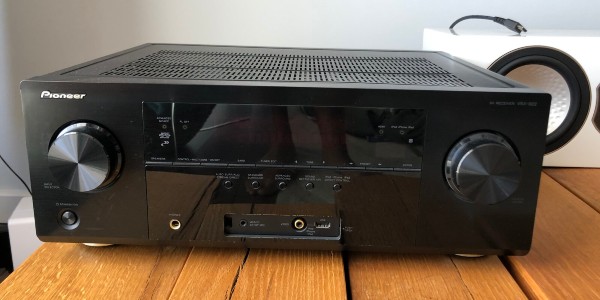
Most people use the pre-out with a subwoofer. Subwoofers generally come with their internal amplifier, and it is beneficial to use a pre-out connection in this way. But you also can use a pre-out connection with all kinds of channels to your home theatre.
Some of the most expensive A/V receivers remain in lack of sufficient power so that you cannot decorate your home theatre as your wish even if you have enough speaker ports. But separate power amplifiers can calm your mind, and it helps you place the speakers where ever you want what was not possible because of power limitations.
When you are going to use a massive subwoofer or special speaker channels, we recommend using an external amplifier with these added speakers. It can increase the sound quality and lessen the load on your receiver’s built-in amplifier.
Many subwoofers and other speakers come with their power amplifiers. These are known as Active Speakers. These subwoofer and speakers require a pre-out connection. If you do them properly, it will improve your hearing experience, lessen the load on your receiver’s built-in amp, and allow your speakers to give the output to the fullest.
Again, if you have Zone 2 or Zone 3 output ports, you will be able to play audio in another room. Moreover, if your speaker’s size is slightly large, the output ports allow your system to use more power. So you can realize that pre-outs can give you a great opportunity to upgrade your home theatre.
Pros of Using Pre-Outs
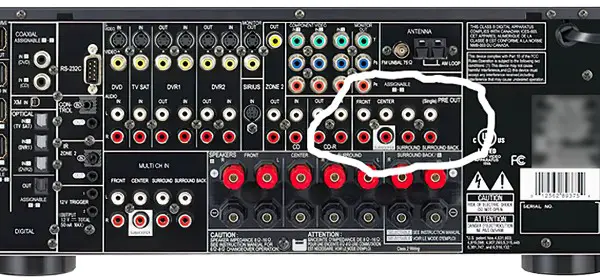
I think you have realized some of the Pre-Out benefits by reading this post till now. Now let’s take a look at some particular benefits.
Less Strain on Your A/V Receiver
Using pre-outs with an external power source is very beneficial. First of all, after using a pre-out now, your receiver has to use less power. You always have to take care of your A/V receiver, and you should purchase a more expensive type so that you do not have to push it hard to the full capacity.
The Onkyo TX-RZ820 THX-Certified 4K Receiver comes with the pre-outs for 7.1 channels of sound one of the most famous receivers. So that you can scale up and expand your speakers to a pre-out without crossing the receiver’s limit.
The built-in amp of the receiver has a limited power supply. So the pre-out helps the receiver by connecting external amplifiers so that the receiver has to share the power among fewer channels. And it makes the output of the receiver better.
Add Channels and Improve Your Speaker System
The pre-out also increases the capabilities of your surround sound system. With the help of pre-outs, you will make complex setups (such as Dolby Atmos) possible.
If your pre-out section comes with the speaker connections mentioned as “Front Wide” or “Height 2”, then you should use an external power source to power these ports. There are different kinds of usage of your home theatre, but you have to understand when to use each connection which is very important.
Pre-Outs Improve Sonic Character
If you connect both Passive Speakers to the receiver’s built-in power amplifier and the Active Speakers with their power amplifiers, you will be able to get a good output when you are using pre-outs. Your system will be improved. Pre-outs are not necessary for a basic speaker system; you will need pre-outs for more advanced and expensive setups.
Cons of Pre-Outs
Though pre-outs are used to make some advanced and expensive setups possible, they still, it has some shortcomings.
Pre-Outs Can Be Expensive
The pre-outs are often costly. If you want to have a high-end home theatre system, you have to pay a good amount. With a more expensive A/V receiver, you will be able to get the experience you are looking for. But buying a powerful A/V receiver with plenty of options in the pre-out section will cost you a lot of money.
If you are shopping for a new receiver, some receivers like the Denon AVR-S540BT 5.2 channel 4K Receiver can convince you. But if you want to expand your receivers later, it will be better if you do not this type of receiver because there are no pre-outs in this receiver.
More Amplifiers Means More Power Consumption
Another thing you should think about before buying an A/V receiver is power consumption. The more powerful your receiver is, the more it will use the energy. Moreover, you have to plug your subwoofer into an outlet. Home theatres are quite expensive, and using an advanced system that uses additional power will cost you more.
Additional Cables and Potential Sound Issues
If you use most of the pre-out connections on your receiver, you will meet plenty of cables, and things can get complicated. So you have to have a good idea of cable management to keep your cables organized and safe.
When using different amps, little inconsistencies can occur with your sound. These defects are so minor that nobody will notice.
Are Pre-Outs Common on A/V Receivers?
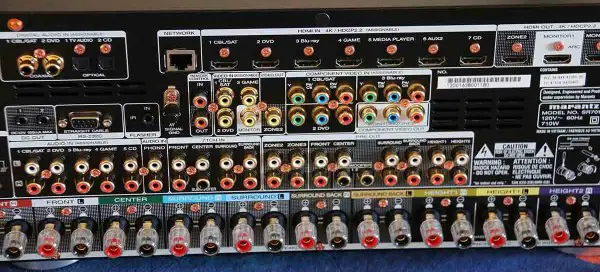
Nowadays Pre-outs have become pretty common on A/V receivers, mostly on expensive units. Different kinds of A/V receivers are available on the market with different connections. So you have to be sure what option you need, before buying.
More expensive receivers will surely have more connections than cheaper units. Even some speaker comes with no pre-out connection. But most of the A/V receivers available on the market come with a pre-out connection.
How do I use the Pre-Out on My A/V Receiver?
Using pre-outs of your receiver is not a hard task. First, you have to find out if your speaker is going to use the built-in amplifier of your receiver or it is going to use an external amplifier. For speakers with an external amp, you have to find the supported pre-out connection on the receiver. When you connect your subwoofer with pre-outs, you can connect it through a single tip RCA cable or use an RCA cable and Y-Splitter if there are multiple sub inputs. Some receivers come with a dedicated subwoofer cable. After plugging your receiver and speaker correctly, now you are ready to play audio.
-our editorial board has reviewed this article and has been approved for publication according to our editorial policy.
Best Seller AV Receivers & Amplifiers:
Last update on 2026-10-08