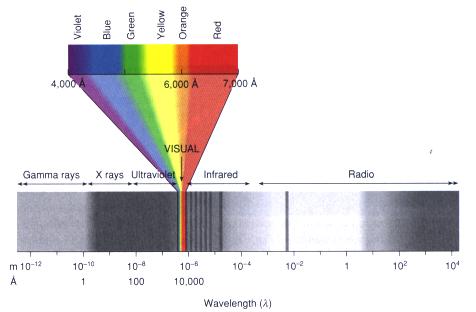
The part of the electromagnetic spectrum with the longest wavelength is the radio wave region. The radio wave region of the electromagnetic spectrum has the longest wavelength.
These waves have a low frequency and are often used for communication and broadcasting purposes. They have a range of wavelengths, from several centimeters to hundreds of meters. Radio waves are commonly used for AM and FM radio broadcasts, television signals, and wireless communication technologies such as cell phones and Wi-Fi.
They can also be used for radar systems and in astronomy to study celestial objects. Due to their long wavelength, radio waves are able to travel through obstacles and are less affected by interference compared to shorter wavelength waves.
The Electromagnetic Spectrum: An Overview
Brief introduction to the electromagnetic spectrum
The electromagnetic spectrum is a vast range of electromagnetic radiation that encompasses various types of energy waves. It includes everything from radio waves with the longest wavelengths to gamma rays with the shortest wavelengths. This spectrum is fundamental in understanding how light and energy travel through space and interact with matter.
Different parts of the spectrum and their wavelengths
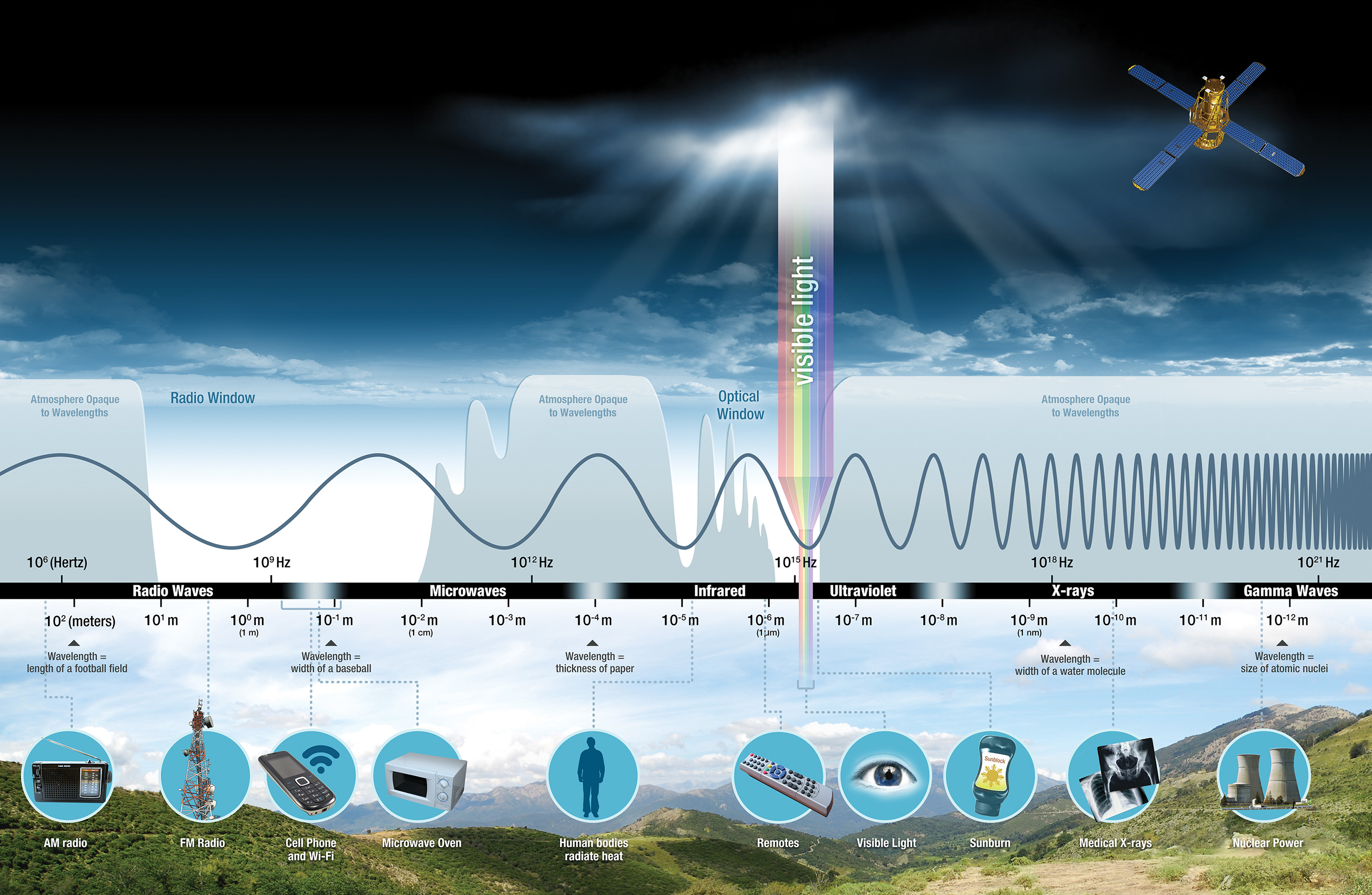
The electromagnetic spectrum can be divided into several distinct regions, each characterized by its unique wavelength range and properties:
- Radio Waves: These waves have the longest wavelengths ranging from about 1 millimeter to thousands of kilometers. They are commonly used for communication, broadcasting, and radar systems.
- Microwaves: With slightly shorter wavelengths than radio waves, microwaves range from about 1 millimeter to 1 meter. They are used in various applications, such as cooking, satellite communication, and radar technology.
- Infrared Waves: Falling between microwaves and visible light, infrared waves have wavelengths around 700 nanometers to 1 millimeter. They are known for their heat-producing properties and are utilized in applications like thermal imaging and remote controls.
- Visible Light: This is the part of the spectrum that human eyes can perceive. It ranges from approximately 400 to 700 nanometers, encompassing all the colors of the rainbow. Sunlight, as well as artificial light sources, emit visible light.
- Ultraviolet (UV) Waves: UV waves have wavelengths shorter than visible light and range from 10 to 400 nanometers. They are responsible for sunburns and play a crucial role in processes like vitamin D synthesis. UV waves are utilized in various applications, including sterilization and fluorescent lighting.
- X-Rays: X-rays have even shorter wavelengths, ranging from 10 to 0.01 nanometers. They are commonly used in medical imaging, airport security, and industrial inspections due to their ability to penetrate certain materials.
- Gamma Rays: With the shortest wavelengths in the electromagnetic spectrum, gamma rays range from less than 0.01 nanometers to 0.0001 nanometers. They are highly energetic and can be produced by nuclear reactions and radioactive decay. Gamma rays are widely used in cancer treatments and sterilization processes.
Importance and applications of the electromagnetic spectrum
The electromagnetic spectrum plays a crucial role in numerous aspects of our daily lives. Its different regions are utilized in various applications and technologies that have revolutionized communication, medicine, and scientific research.
Communication: Radio waves and microwaves form the backbone of wireless communication systems like cell phones, Wi-Fi, and satellite communication. These waves enable us to transmit and receive information over long distances.
Medical Imaging: X-rays and gamma rays are essential in medical imaging techniques such as X-ray radiography, CT scans, and gamma-ray imaging. These technologies allow doctors to detect and diagnose various health conditions or injuries.
Remote Sensing: The different parts of the spectrum, especially infrared and ultraviolet waves, are utilized in remote sensing applications. Satellites equipped with sensors can capture images and data about Earth’s surface, vegetation health, weather patterns, and atmospheric composition.
Industrial Applications: The electromagnetic spectrum finds applications in numerous industrial sectors. For example, infrared waves are used in heat-sensitive manufacturing processes and quality control. X-rays and gamma rays are employed for industrial inspections, ensuring the integrity of materials and structures.
Astronomy and Astrophysics: Scientists rely on various regions of the electromagnetic spectrum to study celestial bodies and unravel the mysteries of the universe. Visible light, radio waves, X-rays, and gamma rays provide valuable insights into the composition, behavior, and evolution of stars, galaxies, and other astronomical objects.
Energy Production: Some parts of the electromagnetic spectrum, like visible light and infrared waves, are utilized in solar panels to convert light energy into electricity. This renewable energy source plays a vital role in reducing our reliance on fossil fuels.
Scientific Research: The electromagnetic spectrum serves as an invaluable tool for scientists across various disciplines. They use it to study the properties of materials, conduct experiments, and gather data that advances our understanding of the natural world.
Overall, the electromagnetic spectrum presents a wide range of opportunities and applications that significantly impact our modern world. From everyday communication to groundbreaking scientific discoveries, its importance cannot be overstated.
Radio Waves: The Giants Of Wavelengths
Radio waves are an essential part of our everyday lives, playing a crucial role in technology and communication. They belong to the electromagnetic spectrum, which consists of various types of waves with different wavelengths. Among these, radio waves stand out as the giants of wavelengths, with the longest wavelength range compared to the other waves.
Definition and properties of radio waves
To begin understanding radio waves, let’s define them:
Radio waves are a type of electromagnetic radiation with the longest wavelength in the electromagnetic spectrum.
Properties of radio waves include their ability to travel through space and the atmosphere, even penetrating buildings and other obstructions. They are less energetic than other types of waves, such as microwaves, infrared, and visible light waves.
Detailed explanation of radio wave wavelengths
When it comes to wavelength, radio waves have a wide range, spanning from about 1 millimeter (mm) to thousands of kilometers (km). To put it into perspective, the wavelength of a typical FM radio emission is around 2 meters, whereas a long-wave radio signal can have a wavelength of kilometers.
To further understand the concept, let’s visualize and compare some common objects and their sizes to radio wave wavelengths:
| Size | Object | Approximate Equivalent Radio Wave Wavelength |
|---|---|---|
 |
A grain of sand | Around 1 mm (millimeter wave) |
 |
A small coin | A few centimeters (centimeter wave) |
 |
A car | A couple of meters (FM radio wave) |
 |
A city | Kilometers (long-wave radio signal) |
These examples showcase just how immense the wavelengths of radio waves can be compared to everyday objects.
Applications and uses of radio waves in technology and communication
Radio waves have an array of applications and uses in various fields, particularly in technology and communication. Some notable applications include:
- Radio broadcasting: Radio waves enable the transmission of news, music, and entertainment to a vast audience.
- Wireless communication: Devices like mobile phones, Wi-Fi routers, and telecommunication systems utilize radio waves for wireless data transmission.
- Radar technology: Radio waves play a crucial role in radar systems, helping in aircraft navigation, weather monitoring, and detecting objects.
- Satellite communication: Communication satellites use radio waves to send signals across long distances, facilitating global communication and television broadcasting.
- Remote controls: Many household devices, such as televisions and garage door openers, operate through radio wave signals sent from a remote control.
These are just a few examples of the wide-ranging applications of radio waves, emphasizing their importance in modern technology and communication systems.
Infrared Radiation: Beyond The Visible Light
When we think of light, we often picture the colors of the rainbow – red, orange, yellow, green, blue, indigo, and violet. However, what many people are not aware of is that there is more to light than what meets the eye. Beyond the visible light spectrum, lies a fascinating world of electromagnetic waves, including infrared radiation.
Understanding the concept of infrared radiation
Infrared radiation is a form of electromagnetic radiation that lies just beyond the visible light spectrum. While our eyes cannot detect it, we can feel it as heat. The word “infrared” itself translates to “below red,” indicating its position in the electromagnetic spectrum, with longer wavelengths and lower frequencies than visible light.
Discussion on the wavelengths of infrared radiation
Infrared radiation encompasses a wide range of wavelengths, ranging from the near-infrared region (around 700 nanometers) to the far-infrared region (up to several millimeters). These longer wavelengths allow infrared radiation to penetrate certain substances, such as smoke, fog, and clothing, making it useful for various applications.
The infrared spectrum can be further divided into three categories: near-infrared (NIR), mid-infrared (MIR), and far-infrared (FIR). Each category has its own unique wavelength range and properties, enabling different applications and discoveries.
| Infrared Spectrum Category | Wavelength Range | Applications |
|---|---|---|
| Near-Infrared (NIR) | 700 nm – 1.5 µm | Medical imaging, remote controls, optical fiber communication |
| Mid-Infrared (MIR) | 1.5 µm – 15 µm | Thermal imaging, gas sensing, molecular spectroscopy |
| Far-Infrared (FIR) | 15 µm – 1000 µm | Astronomy, thermal regulation, biological research |
Significance and applications of infrared radiation in various fields
Infrared radiation plays a significant role in numerous fields, owing to its unique properties and ability to interact with different materials and substances. Some notable applications include:
- Thermal imaging: Infrared cameras can capture heat signatures, allowing firefighters to locate individuals in smoke-filled rooms or identifying heat loss areas in buildings for energy efficiency.
- Medical imaging: Near-infrared light is used in techniques such as optical coherence tomography (OCT) and near-infrared spectroscopy (NIRs), aiding in disease diagnosis and monitoring.
- Security and surveillance: Infrared sensors are utilized in motion detectors and night vision devices, enhancing security measures and visibility in low-light conditions.
- Astronomy: Far-infrared telescopes enable us to observe celestial objects, including distant galaxies and star-forming regions, as they emit infrared radiation.
- Industrial applications: Infrared technology is utilized in quality control, moisture detection, and material sorting in industries like agriculture, food processing, and manufacturing.
These are just a few examples of the wide-ranging applications of infrared radiation, showcasing its versatility and importance in modern technology and scientific research.
In conclusion, infrared radiation extends beyond the visible light spectrum, offering insights and possibilities that our eyes cannot perceive. From medical imaging to astronomical observations, this unique form of electromagnetic radiation continues to revolutionize various fields, bringing forth new discoveries and advancements.
Microwaves: Long Wavelength With Powerful Impact
Microwaves are a crucial part of the electromagnetic spectrum, characterized by their long wavelength and powerful impact. The wavelength of microwaves ranges from approximately one millimeter to one meter, giving them the ability to penetrate through various materials. In this section, we will delve into the introduction, characteristics, and utilization of microwaves in technology, communication, and cooking.
Introduction to Microwaves and Their Characteristics
Microwaves, as a part of the electromagnetic spectrum, are electromagnetic waves that have longer wavelengths than visible light but shorter wavelengths than radio waves. Their wavelengths fall between 1 millimeter and 1 meter, making them suitable for a wide range of applications. Microwaves are produced by various natural and man-made sources, including the sun, cosmic microwave background radiation, and microwave ovens.
Characteristics of Microwaves:
- Long Wavelength: Microwaves have longer wavelengths compared to other parts of the electromagnetic spectrum, enabling them to pass through substances like glass, plastic, and ceramic.
- Penetration: These waves can penetrate materials, such as food, without altering the physical appearance. The energy is primarily absorbed by water molecules, which results in the efficient heating of food.
- Low Energy: Microwaves have lower energy compared to X-rays and gamma rays, making them safe for various applications, including cooking and communication.
- Non-Ionizing Radiation: Unlike X-rays and gamma rays, microwaves are non-ionizing radiation, meaning they do not have enough energy to remove tightly bound electrons from atoms or molecules.
Detailed Exploration of Microwave Wavelengths
The wavelength of microwaves ranges from one millimeter to one meter, falling between infrared waves and radio waves on the electromagnetic spectrum. These long wavelengths provide microwaves with unique properties and applications. Below is a table that showcases different microwave wavelengths and their applications:
| Wavelength Range | Application |
|---|---|
| 1 mm – 20 mm | Microwave ovens, wireless communication devices, radar systems |
| 20 mm – 1 meter | Satellite communication, Wi-Fi, microwave links for remote sensing |
Utilization of Microwaves in Technology, Communication, and Cooking
The long wavelength and unique characteristics of microwaves make them invaluable in various fields:
- Technology: Microwaves are utilized in wireless communication devices, such as mobile phones and Wi-Fi routers, to transmit data over long distances. They allow for faster and more efficient communication.
- Communication: Satellite communication heavily relies on microwaves for transmitting and receiving signals. Microwaves enable high-speed data transfer and reliable communication between satellites and ground stations.
- Cooking: Microwave ovens revolutionized the way we cook food. By emitting microwaves, they heat food quickly and evenly, saving time and energy compared to conventional ovens.
Overall, microwaves with their long wavelength and powerful impact play a significant role in technology, communication, and cooking, enhancing our daily lives with their efficient and versatile applications.
Visible Light: The Spectrum Of Colors
Explanation of Visible Light and its Properties
Visible light is a small portion of the electromagnetic spectrum that humans can perceive with their eyes. It consists of a wide range of colors, each corresponding to a different wavelength. The colors of visible light include red, orange, yellow, green, blue, indigo, and violet, often remembered using the acronym ROYGBIV.
Discussion on the Wavelengths of Visible Light
Visible light is unique because it has a specific range of wavelengths that our eyes can detect. The wavelength of red light is the longest, measuring around 700 nanometers (nm), while violet light has the shortest wavelength at approximately 400 nm. In between, the wavelengths of the other colors gradually change, creating a continuous spectrum of visible light.
To provide a visual representation of the range of wavelengths in the visible light spectrum, here is a table highlighting the approximate wavelengths of different colors:
| Color | Wavelength (nm) |
|---|---|
| Red | 700 |
| Orange | 620-590 |
| Yellow | 590-570 |
| Green | 570-500 |
| Blue | 500-450 |
| Indigo | 450-420 |
| Violet | 420 |
Importance and Applications of Visible Light in Everyday Life and Scientific Research
Visible light plays a crucial role in various aspects of our everyday lives and scientific research. Here are some important applications of visible light:
- Lighting: Visible light is the primary source of illumination, allowing us to see and perform tasks in our daily routines.
- Color Perception: The different wavelengths of visible light enable us to perceive the colors of objects, adding vibrance and beauty to our surroundings.
- Art and Design: Artists utilize the range of colors in visible light to create captivating paintings, photographs, and visual compositions.
- Photosynthesis: Plants use the energy provided by visible light to convert carbon dioxide and water into glucose through the process of photosynthesis, sustaining life on Earth.
- Optics: Visible light is essential in optical technologies, such as lenses, microscopes, telescopes, and cameras, enabling us to explore and observe the world around us.
- Scientific Research: Visible light is extensively used in scientific experiments, including spectroscopy, where the analysis of light emitted or absorbed by substances allows scientists to identify elements, compounds, and study their properties.
Overall, visible light is not only essential for our visual perception but also plays a vital role in various fields, making it a fascinating and significant part of the electromagnetic spectrum.
Credit: www.jpl.nasa.gov
Uv Light: The Sunlight’S Dark Side
Welcome to the fascinating world of ultraviolet (UV) light – the enigmatic, invisible rays present in sunlight. While we often bask in the warmth and glow of sunlight, it’s important to understand that there’s more to the electromagnetic spectrum than meets the eye. One such part of the spectrum is UV light, which not only plays a crucial role in the world around us but also poses potential risks to our health if not managed appropriately. In this section, we will dive deep into the concept of UV light, its various wavelengths, and its impact on health and technology.
Understanding the concept of ultraviolet (UV) light
Ultraviolet light, commonly known as UV light, is a form of electromagnetic radiation with a wavelength shorter than that of visible light but longer than X-rays. It falls between the range of approximately 10 nanometers (nm) to 400 nm. UV light is categorized into three main types based on its wavelength: UVA, UVB, and UVC. UVA has the longest wavelength among the three types, ranging from 315 nm to 400 nm, while UVC has the shortest wavelength, ranging from 100 nm to 280 nm. These varying wavelengths have unique characteristics and effects on the environment, making UV light an intriguing topic of study.
Detailed exploration of UV light wavelengths
Let’s delve into the different wavelengths of UV light and their significance. Here’s a breakdown of the three main types of UV light:
- UVA (315 nm – 400 nm): UVA, also known as long-wave UV, is the type of UV light that penetrates the Earth’s atmosphere and reaches our skin even on cloudy days. Although it is the least harmful of the three types, long-term exposure to UVA rays can still accelerate skin aging and contribute to the development of skin cancer.
- UVB (280 nm – 315 nm): UVB, or medium-wave UV, is the primary cause of sunburn and is responsible for the majority of skin cancer cases. It has a shorter wavelength than UVA, making it partially absorbed by the Earth’s ozone layer. Excessive exposure to UVB radiation can lead to cellular DNA damage and weakened immune system.
- UVC (100 nm – 280 nm): UVC, also known as short-wave UV, is the most dangerous type of UV radiation. Fortunately, it is mostly absorbed by the Earth’s ozone layer, preventing it from reaching the surface. However, UVC is widely used for germicidal purposes in sterilization processes due to its high effectiveness in destroying bacteria and viruses.
Impact and applications of UV light in various fields
UV light’s unique properties open up a world of possibilities in many fields, including health and technology. Here are some notable applications of UV light:
- Health: UV light is utilized in medical and dental settings for disinfection and sterilization purposes. It is commonly employed to kill harmful microorganisms and sanitize surfaces, ensuring a safe environment for patients and healthcare professionals.
- Technology: Many technologies rely on UV light, such as fluorescent lamps, UV curing systems, and UV-based water treatment systems. These applications leverage the unique characteristics of UV light to enable more efficient processes and enhance product quality.
X-Rays: Penetrating Through The Invisible
When it comes to the electromagnetic spectrum, the X-rays are undoubtedly one of the most fascinating components. In this section, we will delve into the world of X-rays and explore their definition, properties, detailed explanation of wavelengths, and their enormous medical and industrial applications. So, let’s dive in and uncover the mysteries of X-rays: Penetrating through the Invisible.
Definition and Properties of X-rays
X-rays are a form of electromagnetic radiation with high energy and short wavelengths. They were discovered by Wilhelm Roentgen in 1895 and were named X-rays due to their unknown nature at the time. X-rays are produced by accelerating electrons, which collide with a target material, causing the emission of highly energetic photons. These photons possess the ability to penetrate matter, making X-rays incredibly useful for medical imaging and industrial applications.
Detailed Explanation of X-ray Wavelengths
Among the vast range of electromagnetic wavelengths, X-rays sit between ultraviolet (UV) light and gamma rays. Unlike other forms of light, X-rays have much shorter wavelengths, ranging from about 0.01 to 10 nanometers (nm). To put this into perspective, visible light has wavelengths between 400 to 700 nm, making X-rays much more energetic.
The shorter wavelengths of X-rays allow them to interact with matter in unique ways. When X-rays encounter an object, they can be absorbed, scattered, or pass straight through depending on the nature of the material. Dense materials, such as bones, absorb X-rays, while less dense materials like soft tissues allow X-rays to pass through. This differential absorption enables X-rays to produce detailed images and helps in diagnosing various medical conditions.
Medical and Industrial Applications of X-rays
X-rays have revolutionized the field of medicine by enabling non-invasive imaging techniques. They play a vital role in diagnosing fractures, dental issues, tumors, and lung diseases. X-ray machines, commonly found in hospitals and clinics, capture images that allow healthcare professionals to visualize internal structures, often without the need for surgery. Additionally, X-rays are used in radiation therapy to treat cancer, where targeted X-ray beams destroy cancerous cells while minimizing damage to healthy tissues.
In the industrial sector, X-rays find applications in quality control and non-destructive testing. They are used to inspect welds, check for defects in manufactured components, and analyze the structural integrity of various materials. This non-invasive inspection method saves time, resources, and ensures the safety and reliability of critical components in industries such as aerospace, automotive, and engineering.
In Conclusion
In conclusion, X-rays, with their high energy and short wavelengths, have proven to be invaluable in a wide range of sectors. From their initial discovery to their numerous medical and industrial applications, X-rays continue to play a crucial role in our technological advancements. With their ability to penetrate matter and provide detailed imaging, X-rays have truly unlocked a window into the invisible world.
Gamma Rays: The High-Energy Wavelengths
Gamma rays are a form of electromagnetic radiation that have the highest energy and shortest wavelengths in the entire electromagnetic spectrum. These high-energy wavelengths make gamma rays truly fascinating to study and understand. In this section, we will delve into the properties and characteristics of gamma rays, exploring their wavelengths and the significance they hold in various scientific and technological applications.Introduction to gamma rays and their properties
Gamma rays are a type of electromagnetic radiation that lies at the extreme end of the electromagnetic spectrum. They have the highest known energy and possess the shortest wavelengths, measuring less than 0.1 nanometers. This means that they have incredibly high frequencies, ranging from 10^19 to 10^24 Hz. Being so highly energetic, gamma rays are produced by the most violent and energetic events occurring in the universe, such as nuclear explosions, supernovae, and even during the creation of black holes.Discussion on the wavelengths of gamma rays
As mentioned earlier, gamma rays have the shortest wavelengths compared to any other form of electromagnetic radiation. The precise wavelength of a gamma ray photon can range from a few femtometers to less than one picometer. To put this into perspective, the diameter of an atom is typically a few angstroms, which is equivalent to 0.1 nanometers or 100 picometers. This means that gamma rays have wavelengths that are thousands of times smaller than the size of an atom! Gamma rays possess such short wavelengths due to their high energy levels. This high energy allows them to penetrate through various materials, including human tissue, making them highly ionizing and hazardous if not properly shielded. In fact, gamma rays are so energetic that they can easily pass through several centimeters of lead or concrete. Interestingly, these high-energy photons can also exhibit wave-particle duality, behaving both as waves and particles simultaneously.Significance and applications of gamma rays in scientific research and nuclear technology
The unique properties of gamma rays make them invaluable in various scientific and technological applications. One of the most significant applications of gamma rays is in the field of scientific research. Scientists use gamma rays to study the composition of matter, detect cosmic events, and investigate the atomic and molecular structures of various substances. Additionally, gamma ray spectroscopy is often employed to analyze the radioactive decay of elements and isotopes. In the realm of nuclear technology, gamma rays play a crucial role. They are utilized to sterilize medical supplies, preserve food, and treat cancers through radiation therapy. Furthermore, gamma rays are an integral component of nuclear power generation. In a nuclear reactor, the energy released from nuclear fission reactions is captured and converted into heat, which in turn produces steam to generate electricity. Gamma rays are emitted as a byproduct during this process. In conclusion, gamma rays, with their high-energy wavelengths, hold a prominent position within the electromagnetic spectrum. They are produced by violent cosmic events and have wavelengths that are thousands of times smaller than the size of an atom. The properties of gamma rays make them indispensable in scientific research and nuclear technology, contributing to advancements in medical treatments, food preservation, and power generation.Frequently Asked Questions On Which Part Of The Electromagnetic Spectrum Has The Longest Wavelength
What Is The Longest Wavelength In The Electromagnetic Spectrum?
The longest wavelength in the electromagnetic spectrum is radio waves. These waves have wavelengths ranging from tens of meters to kilometers and are used for various purposes like communication and broadcasting.
How Are Wavelength And Frequency Related In The Electromagnetic Spectrum?
Wavelength and frequency are inversely related in the electromagnetic spectrum. As the wavelength increases, the frequency decreases, and vice versa. This means that radio waves, which have the longest wavelength, have the lowest frequency, while gamma rays, with the shortest wavelength, have the highest frequency.
Why Are Longer Wavelength Waves In The Electromagnetic Spectrum Considered Safer Than Shorter Ones?
Longer wavelength waves, such as radio waves, are considered safer than shorter ones because they have lower energy and are less likely to cause harm to living organisms. Shorter waves, like X-rays and gamma rays, have higher energy and can be damaging to tissues and cells if not properly shielded.
Conclusion
To summarize, the electromagnetic spectrum is divided into various regions based on wavelength, with each region serving unique purposes. However, when it comes to the longest wavelength, the honor goes to radio waves. From communication to navigation systems, radio waves play a pivotal role in our daily lives.
Understanding the different regions of the electromagnetic spectrum helps us appreciate the vast universe of electromagnetic radiation that surrounds us. Explore further to unravel the wonders of this fascinating phenomenon.