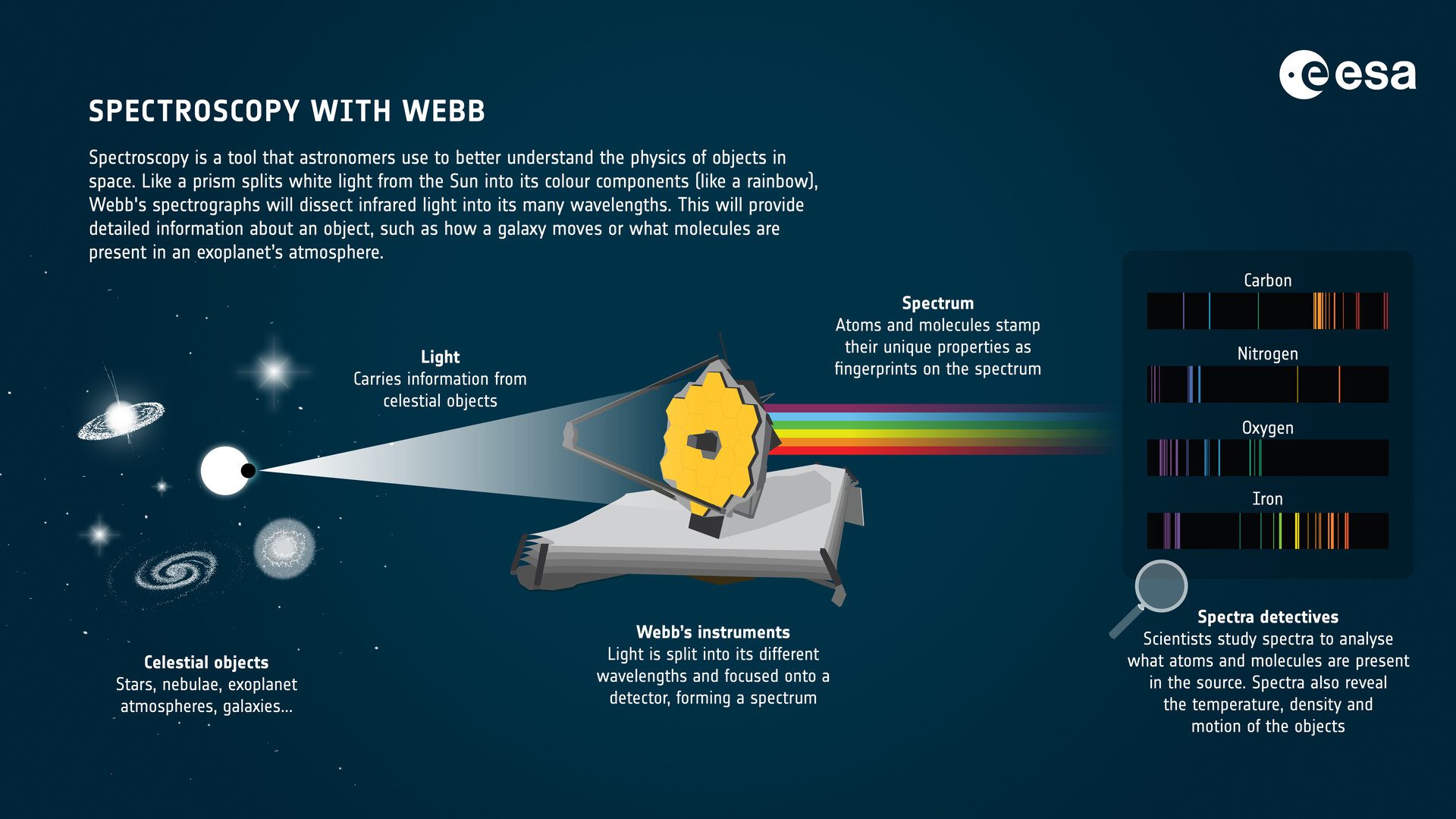
A star’s spectrum offers information about its temperature, composition, and motion. By analyzing the pattern of light wavelengths emitted by a star, scientists can determine its chemical makeup and how it is moving in space.
This data helps astronomers classify and understand different types of stars, their life cycles, and their place within the universe. Additionally, the spectrum can provide insights into a star’s age, size, and energy output. Overall, studying a star’s spectrum is crucial for advancing our knowledge of the cosmos and unlocking the mysteries of the celestial bodies that fill the night sky.
Star’s Spectrum Secrets Unveiled
Importance Of Spectroscopy In Stellar Astronomy
Understanding a star’s spectrum is crucial in stellar astronomy as it provides valuable insights into the physical and chemical properties of the star.
Components Of A Star’s Spectrum
A star’s spectrum consists of various components, each revealing unique information about the star’s composition and temperature. These include absorption lines, emission lines, and continuum radiation.
Tools Used To Analyze Stellar Spectra
Spectroscopy plays a vital role in analyzing stellar spectra, and astronomers use advanced tools such as spectrographs, telescopes, and detectors to capture and analyze the data. The data obtained from these tools allows astronomers to determine elements present in the star, its temperature, and even its radial velocity.
Unraveling Star’s Spectrum
Process Of Light Dispersion And Spectrum Creation
When light from a star is passed through a prism or diffraction grating, it undergoes a process called light dispersion, where the light is separated into its different wavelengths. This creates what is known as the star’s spectrum. Light dispersion occurs because different wavelengths of light are refracted by different amounts, causing them to spread out and form a spectrum.
The Spectrum’s Representation Of Starlight
The star’s spectrum is a representation of the starlight, capturing the distribution of different wavelengths of light emitted by the star. Each line or band in the spectrum corresponds to a specific wavelength of light, and these features provide crucial information about the star’s composition, temperature, and motion. By analyzing the spectrum, astronomers can determine the chemical elements present in the star, its temperature, and whether it is moving towards or away from Earth.
Elemental Composition Clues
When analyzing the spectrum of a star, scientists can glean essential clues about the star’s elemental composition. The atomic composition of a star’s outer layers primarily influences its spectrum, enabling astronomers to discern vital information about the star’s chemical makeup. This elemental composition plays a crucial role in understanding the star’s evolution, behavior, and life cycle.
Identifying Elements Through Absorption Lines
One primary method of determining the elemental composition of a star is through analyzing its absorption lines. Absorption lines in a star’s spectrum indicate specific elements present within the stellar atmosphere. These dark lines are formed when the stellar atmosphere absorbs certain wavelengths of light, indicating the presence of particular elements. By comparing these absorption lines with known spectral lines of elemental gases on Earth, researchers can precisely identify the chemical elements present in the star.
Emission Lines And Their Significance
Additionally, emission lines in a star’s spectrum provide valuable insight into its elemental composition. Emission lines occur when elements within the star’s atmosphere emit specific wavelengths of light. These lines reveal the presence of elements, such as hydrogen, helium, and other heavier elements, which emit distinctive spectral lines. By analyzing these emission lines, astronomers can quantify the abundance of various elements in the star, aiding in understanding its chemical composition and evolutionary history.
Star’s Temperature And Spectrum Correlation
The spectrum of a star provides valuable information about the star’s temperature and other fundamental properties. Understanding the correlation between a star’s temperature and its spectrum is crucial in astrophysics and astronomy. By examining the star’s spectrum, scientists can deduce important details about its temperature and spectral class.
How Color And Temperature Relate To Spectral Class
Color is directly related to a star’s temperature and spectral class. The color of a star is determined by its temperature, with hotter stars appearing blue or white, while cooler stars tend to appear redder. This relationship between color and temperature serves as a useful indicator of a star’s spectral class.
Determining A Star’s Temperature Using Wien’s Law
Wien’s Law is a fundamental principle in astrophysics that allows scientists to determine a star’s temperature based on its spectrum. By analyzing the peak wavelength of a star’s spectrum, astronomers can calculate its temperature. The relationship between a star’s temperature and its spectrum offers valuable insights into the physical properties and behavior of stars.
Motion And Magnetism Insights
When observing the spectrum of a star, astronomers can gather valuable insights into the star’s motion and magnetic properties. By examining the patterns and shifts in the spectral lines, scientists can uncover details about the star’s movement through space and the presence of magnetic fields. These insights provide crucial information for understanding the behavior and characteristics of stars.
Doppler Effect And Stellar Motion
The Doppler effect, manifested in the spectral lines of a star, offers significant clues about the star’s motion. If a star is moving toward the observer, the spectral lines shift towards the blue end of the spectrum due to compression of light waves, indicating a blueshift. Conversely, if the star is moving away, the lines shift towards the red end, known as a redshift. By analyzing these shifts, astronomers can calculate the star’s velocity and direction of motion relative to Earth.
Zeeman Effect And Magnetic Field Detection
Observing the Zeeman effect in a star’s spectrum enables the detection of its magnetic field. When a magnetic field is present, the spectral lines split into multiple components, providing direct evidence of the star’s magnetic activity. This phenomenon allows astronomers to quantify the strength and structure of the star’s magnetic field, offering insights into its behavior and potential impact on surrounding objects.

Credit: alcalde.texasexes.org
Star’s Spectrum Lifecycle Information
How Spectra Change As Stars Age
The spectral features of a star change as it progresses through its life cycle. Various elements within the star’s outer layers emit and absorb specific wavelengths of light, resulting in distinctive patterns in the star’s spectrum. As a star ages, its composition, temperature, and luminosity evolve, leading to observable shifts in its spectrum. These changes can offer valuable insights into a star’s current stage of development and provide clues about its past and future.
Gleaning A Star’s Past And Future From Its Spectrum
By analyzing a star’s spectrum, scientists can glean valuable information about the star’s history and potential future evolution. The abundance of certain elements, the presence of absorption or emission lines, and the overall shape of the spectrum can provide clues about the star’s formation, previous stages of nuclear fusion, and potential outcomes, such as supernova explosions or the formation of planetary nebulae.
Frequently Asked Questions Of What Information Does A Star’s Spectrum Offer About The Star
What Is A Star’s Spectrum?
A star’s spectrum is the pattern of colors produced when its light is spread into its component wavelengths. This can reveal information about the star’s chemical composition and temperature.
How Is A Star’s Spectrum Obtained?
A star’s spectrum is obtained by using a spectrograph to disperse the star’s light into its component colors. This allows astronomers to analyze the specific wavelengths present and deduce important information about the star.
What Does A Star’s Spectrum Reveal About The Star?
A star’s spectrum reveals critical information such as its chemical composition, temperature, and movement. By analyzing the lines in the spectrum, astronomers can determine the elements present in the star’s atmosphere and their quantities.
Why Is A Star’s Spectrum Important?
Understanding a star’s spectrum is crucial in determining its properties and evolutionary stage. It helps astronomers study the birth, life, and death of stars, and provides insights into the universe’s composition and history.
Conclusion
In understanding a star’s spectrum, we gain valuable insights into its composition, temperature, and motion. By analyzing the absorption and emission lines, astronomers can determine the elements present and their abundance. This information helps us understand the star’s lifecycle, its evolutionary stage, and its place in the universe.
Exploring a star’s spectrum opens a window into its intrinsic properties and enriches our knowledge of the cosmos.